

It’s more than a symbiotic relationship – education is in desperate need of wellness, and that means our learners, parents and teachers need support.
Written by Nicole Bayes
It seems simple to say that school is an enormous part of life, whether you are a parent or a learner, but we don’t actually think about what that means. What it actually means is that whatever pressures there are in the education environment, they are transferred to the home and vice versa. For those working in education, the boundary between home and work life is even more jagged than it should ever be. What we are seeing at I Can Brain is exhaustion. Learners, parents and teachers are slumped in a space of overwhelm as the education ecosystem is a bit of an anxious mess… to say the least.
In Cape Town specifically, ‘maintaining face’ as a parent or school, or even as a learner, means that ‘everything is just fine’ when actually, dialogue around the pressures of parenting, teaching and learning is critical for change. We are all feeling isolated in this pitfall of struggle, where we feel like we can’t talk about the difficulties we are facing. We may complain about certain things, and acknowledge the chaos from time to time, but actually trying to put our finger on what this distress is, facing it and working through it, isn’t happening – we just don’t have time to deal with it all, we need to reach that deadline! Ironically, this just makes us spiral more.
Within this anxiety lies scepticism. Parents are especially sceptical of the term ‘mental health’ or ‘counselling’ or even something as gentle as ‘wellness’ becomes a nose-in-the-air moment… all because we don’t want anyone to know that we or our children are sometimes at war with our own brain. This leads to that internal war being projected outwardly, because bottles, when under pressure, will have to explode at some point. Working closely with parents, learners and schools, I hear the same words of struggle uttered throughout and it’s embedded in this feeling that everyone is on this sort of treadmill where the education-related to-do-list never ends.
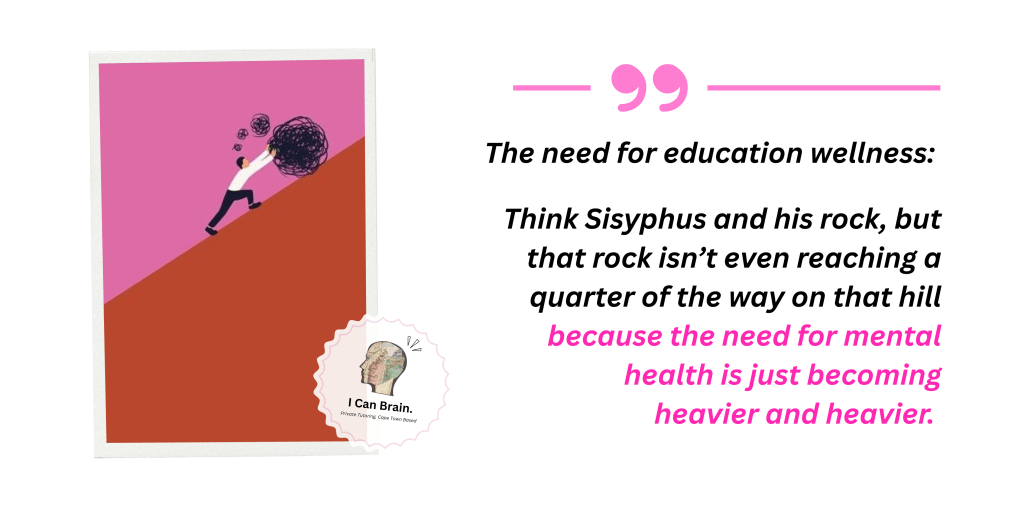
Wellness in education is needed. It is something obvious to us all, but at the moment, those in SBST’s or those that are school counsellors (even teachers) are on their own sort of trying-to-put-wellness-in-education treadmill – think Sisyphus and his rock, but that rock isn’t even reaching a quarter of the way on that hill, because the need for mental health is just becoming heavier and heavier. What we need is to be seen and feel seen, which is where education wellness becomes essential. The simple truth is that we don’t learn unless we feel safe and emotionally regulated. This extends to parenting and teaching: we can’t support and guide children and teens if we don’t feel grounded. Not talking about these things isn’t helping either.
If we don’t have an open dialogue and put our hand up to say we are struggling, we don’t have a sense of community. Learners, parents and teachers are facing major troubles at the moment, especially as learners are finding their identity which ultimately means that bullying is a reality – kids are impressionable. The nightmares some parents are living at the moment with their children self-harming (we are talking as young as 10) or attempting to take their own lives, is completely unimaginable to most, but it is the reality that we see, especially among middle-class working families. And the worst part? This is happening in the home next door to you or to the family sitting behind you in the morning school traffic… A simple conversation can make everybody feel less alone.
So, let’s open the conversation around what that anxiety looks like in Cape Town for these 3 spheres that intersect in education: parents, teachers and learners. Let’s see how much of this speaks directly to you, because I would be surprised if it doesn’t.
Parenting is hard.
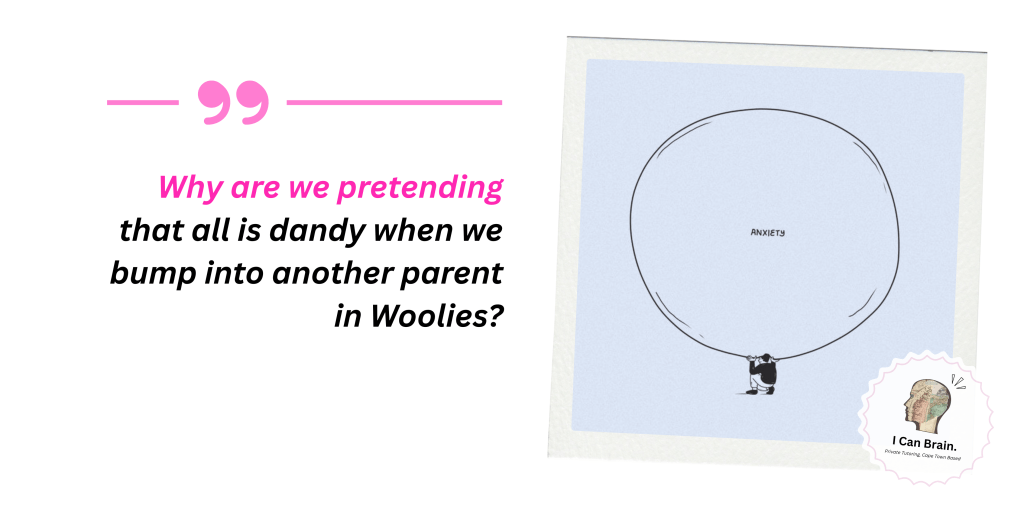
This is a simple fact. Mix in Cape Town’s highly anxious education landscape where deadlines, exams, sports and extracurricular activities fill the calendar to the brim, and you have parents trying to find some sort of balance in the home between their own sanity, their job and supporting their children. So why don’t we talk about this? Why are we pretending that all is dandy when we bump into another parent in Woolies? Because in reality, the week you are having consists of the one child slamming the door and refusing to say “I love you” anymore when they get out the car at school (they’re 13 and too cool for that now) and the other one? Well they have grade 11 exams to prep for, a hockey tournament, a waterpolo match and a drama production coming up – they are frazzled, fidgety and forgetful.
Of course, at the Saturday braai, you then have to hear how Adam and Carey’s kids are doing amazing in school and their son, Oliver, is going to SA champs soon for swimming AND water polo! What Adam and Carey didn’t tell you about are the continual arguments that they have with their kids about being on time for school, studying, and of course the tantrums thrown by Oliver about having to attend 3 Math’s tutoring sessions a week, even though he has dyscalculia, and really, all he wants to do is swim… So, now you go home and start reflecting on your own kids and think to yourself that it’s a good idea to have a motivational talk with them, but all you’re met with is an eye roll. That dinner table conversation later is going to be a struggle… Sound familiar? I can promise you that you are not alone.
Teaching is harder.
It’s a struggle with one child in the home, now imagine having 25 to 30 learners at a time that, by law (in Loco Parentis), you are now legally responsible for. That’s enough pressure already, and genuinely causes a boatload of anxiety as teachers are constantly in fear of making a mistake. For the fun of it, let’s sprinkle in WCED curriculum deadlines, a stack of paperwork, because your one grade 4 learner refuses to do his Afrikaans work, so now he will fail Afrikaans, and you have to document this all, because it’s on your shoulders… Oh wait, Sarah is having a panic attack, and 6 different learners have questions, and Johnny has to go to the bathroom NOW, and a parent is angry at you because their child was called names by another child, and you need to print the worksheet for the next lesson, and of course, set that exam, mark the essays and the stack of assignments on your desk from last week that you didn’t get around to, because you had to referee a rugby game where 3 parents are now upset because you didn’t give their kid enough playing time. Breathe in, breathe out…
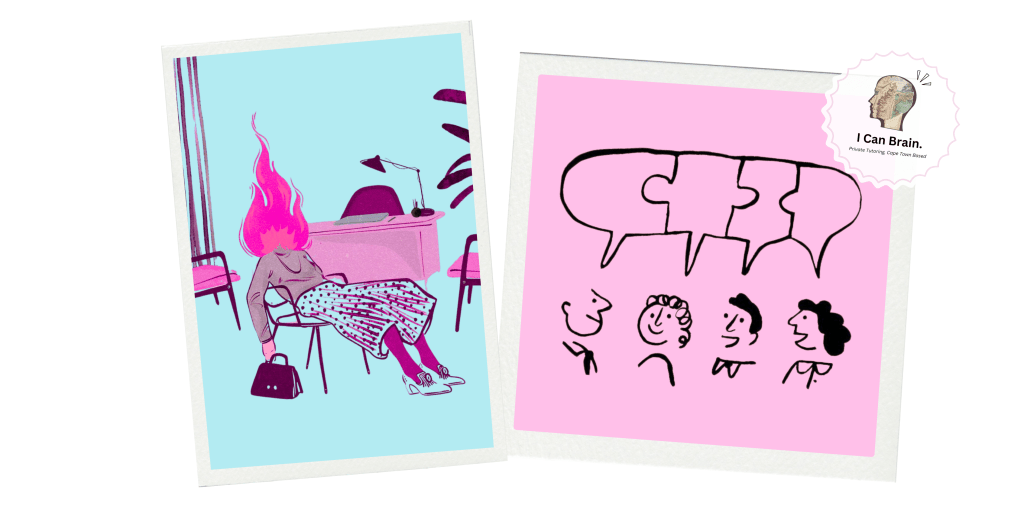
Phew, break time… now you sit in the staff room where all your fellow educators are trying to take a moment to catch their breath, have a coffee and exist for a few minutes… But wait, the HOD needs to address something very important and so your break time is spent listening to a half-hearted motivational speech, because even the HOD is upset that they aren’t getting a break…and the poor principal? Well they’ve had a morning of phone calls with parents, mostly because they have an issue with several teachers ‘not doing enough’ or seeking reassurance that their parenting is okay. Don’t worry, those same parents will send you an email and come to your class for a meeting to repeat and make sure you understand again that you are ‘not doing enough.’ The learners that are also struggling in your classes, desperately need additional help, but in order to get that help you need to set up a meeting with the SBST and present evidence of behavior and struggles, which is a monumental amount of paperwork, all for the SBST to say that it’s not enough – which isn’t their fault, the system just works that way… No wonder so many are leaving the profession due to burnout. Sounding familiar? Teachers, you are definitely not alone.
Learning is the hardest.
Pivoting towards a learners perspective, the plate that is their life is starting to pile up with scoops of every sport possible, extracurricular activities and then several slices of homework… There are two tests this week, one assignment and a Science project that was forgotten about, so the whole household is scrambling around for a glue stick at 10pm! Where’s the fun? They have break time for that and plenty of weekends. Think again! Break time looks like Jimmy trying to cram for his test, Olivia looking for the jacket she lost, Ella falling asleep, as she was up late last night stressed about her English oral and Luke who is having some laughs with his friends, but something deep inside him has him worrying about disappointing his parents… Oh, maybe Lily and Rupert are having fun at break time because they are playing soccer or doing Tik Tok dances, but they are also bracing themselves for the following lesson where they get in trouble for not having any time to complete their homework… again.
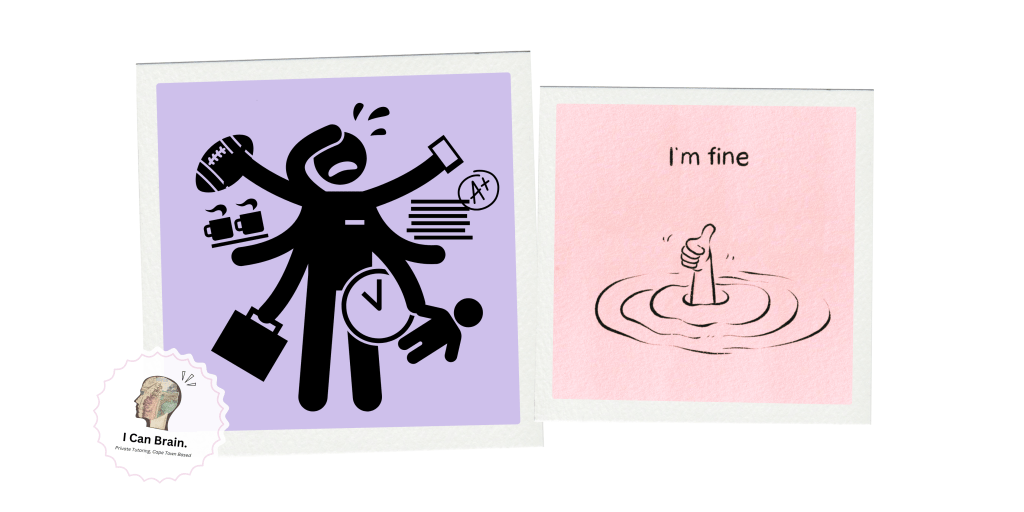
Weekends are free right? Well, apart from sports matches, clubs, projects and going to social events filled with anxiety, because whilst it’s fun, you’re still trying to work out your own identity, so it’s tiring trying to figure out who you are in the crowd… “Let me sleep in!” Katie yells at her mom because she could really do with a solid 10 hours, but it seems to her parents that she isn’t studying enough, so the logical solution must be that she goes to extra Afrikaans lessons on a Sunday morning. “But all your friends will be there doing Afrikaans too!” Katie’s mum replies. Sigh. That drive and that confidence? Poof! Gone. Here come the rising statistics in adolescent anxiety…
So let’s add all three of these whirlwind lives together.
What we see are more and more anxious learners and parents looking into concentration medication without a relevant diagnosis. The justification for this: reason one sees learners that are overwhelmed, which affects focus and heightens avoidance; reason two catches parents thinking that their child in grade 8 NEEDs to be getting A’s (Are they passing? Yes? They’re doing great!) and reason three is because teachers simply cannot juggle 25 learners all getting distracted by a fly all day, every day.
Of course, learners actually diagnosed with ADHD or General Anxiety, are struggling even more with executive functioning, because planning is tough to begin with, but when the week looks the way it looks, it’s far easier to not think about it. Those learners who are anxious about pleasing their parents, they too don’t want to face reality. So here we are, with learners swimming around in a fiery lake of avoidance with parents that feel like they are going insane because, “they just won’t do anything!” or “they don’t study enough!” And the teachers? Well they now need to conjure up a miracle, whereby they cast a magic spell that makes all learners motivated and settles all parents’ fears in the 20 meetings they’ve booked to check on their daughter’s progress. Ugh, time to go fill in another Individual Support Plan and try and implement one for each of the 30 learners…
Seems a little normal for everyone to be struggling and feeling overwhelmed, right?
Enter Education Wellness…
This is where the concept of education wellness waltzes in with its sparkly page turning song, (you know, like the children’s audiobooks from back in the day?). Apart from the work we are doing at I Can Brain to provide a gentle hand to parents, learners and teachers, it’s about encouraging you to speak openly about the struggles that are ever-present for us all.
It’s our purpose at I Can Brain to offer assistance and guidance to all, in the hopes that bringing kindness to even one person within the education sphere will result in a domino effect of kindness being spread throughout. Already, through our conversations with various parents, schools and learners, we are seeing positive change. When I built I Can Brain’s tutoring model, it was with the sole focus of intertwining academics with confidence building – learners have had a long day at school, and generally when they need help in a specific subject, there is a negative mindset towards it already, so it’s our job to raise their self-confidence and change their approach.
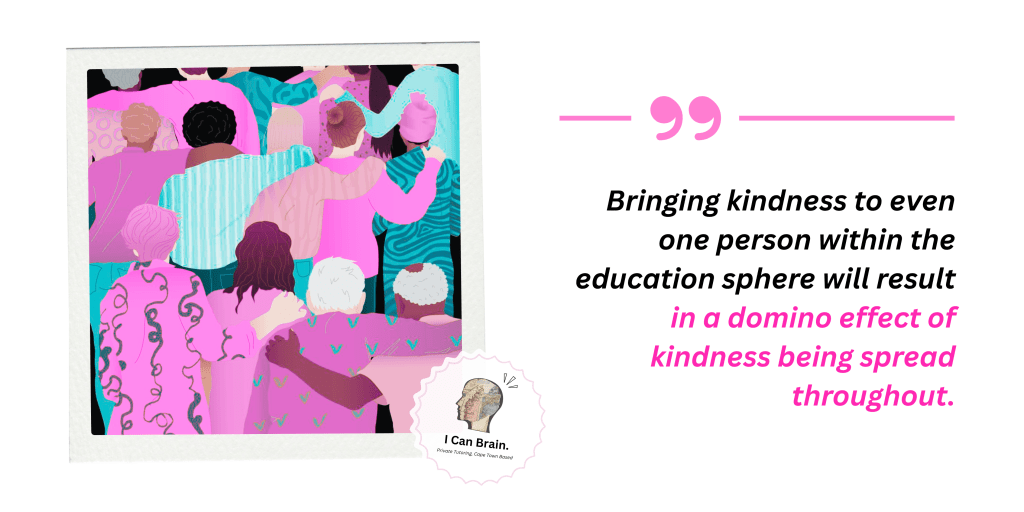
What we are seeing through our alternative approach to tutoring, are learners that feel stronger, resulting in them being able to tackle their struggle-subjects with self-belief, leading to an improvement in their grades. The effect it has on parents too is impressive, in that they feel a sense of relief, which ultimately extends to the classroom for teachers. We have further taken the fusion of academics and mental health by launching Education Wellness, where counsellors and educators have collaborated and built packages designed to balance both. The whole aim is to provide safe spaces for learners to have a platform to talk through big feelings, learn how to identify them and navigate them, which ultimately leads to more focus and reduced anxiety around learning. By saying things out loud, we are able to see what we need in front of us and I encourage you to take a moment to think about what you need, how you can meet that need and who you can ask for support – because we all could do with a helping hand here and there.
It seems like talking is how we overcome this heightened-anxiety that is plaguing the education ecosystem here in Cape Town. Your goal for the day? Say it out loud.


Leave a Reply