

Written by Ginn
At approximately 8pm on a Saturday night I sit down to write.
Getting to this point has been a herculean task – in fact even as I write these first few lines I haven’t convinced myself I’m actually going to sit and do it (I’m sort of faking it and hoping I make it.) My draft for this blog is due on Monday morning. Despite having known about the deadline for at least two weeks, I only remembered it Friday morning. Naturally, in response to the sudden onset of panic, I spent several hours at the gym, baked a loaf of bread and decided to cut my own hair. I opened and closed my laptop multiple times, called my sister, and started a new crochet project. Now, roughly 36 hours later, it seems there’s sufficient cortisol in my body to finally get down to business. There’s no one at home to body-double me, and so I’ve put on a series (foreign language, no subtitles, so as not to distract me) to pretend there’s someone else in the room. I have a drink and a snack and a jersey nearby in case I get cold – I can’t give my future self any excuse to get up and go off on a tangent. It’s go time.
None of this behaviour is out of the ordinary. I have spent my whole life going through the same cycles of panic, procrastination and extreme pressure every time I need to get something done. Looking back, the writing was on the wall – but it took twenty-seven years and reaching a state of burnout for somebody to finally diagnose me with ADHD.

In junior school, I sat at a special desk all by myself facing the wall so that no one could distract me. I was banned from using the bathroom during class time because I would ask to go often, and then end up wandering around for ages before coming back. I don’t think I completed a single piece of school work until I was about 12 (but I did learn to forge my grade 2 teacher’s signature in my homework diary).
Despite this, I did well in high school, and nobody questioned anything. Behind the scenes I was desperately scribbling forgotten homework at break, furiously starting and completing projects the night before, and generally spending time as an anxious wreck. At university the stakes were even higher. I was there on a bursary, I was triple-majoring, I needed to seriously pull myself together. I still left things to the last minute. My partner at the time just couldn’t understand – I liked what I was learning and writing about, I wanted to do it – so why wasn’t I just doing it? I wondered the same. I could wax lyrical about what my essay was going to be about. Instead I would spend hours, days panicking. I would have sleepless nights stressing about the fact that I needed to just sit down and write, and then wake up and have tearful meltdowns because I just. Couldn’t. Do it.
When I became a teacher, I knew my behaviour had to change. I had lists for everything. I had timetables and planners and calendars and sticky notes. I had folders and files and labels and drawers. I cared very very much and I tried very very hard. I loved being in the classroom. I planned lessons and set tests and marked papers and coached sports and ran rehearsals and wrote reports. And sometimes I only remembered my kids were writing a test that week because they asked a question about it on Monday – I’d set the test, I’d reminded them about it for ages – but I’d completely forgotten about it until little Lucy (bright, type-A, organised) brought it up. And Vuyo had to remind me every day for about three weeks before I remembered to print an extra copy of the booklet he needed, and at the end of every term I would put off my marking usually until I was sitting at home surrounded by about 400 papers and five days to complete it all.
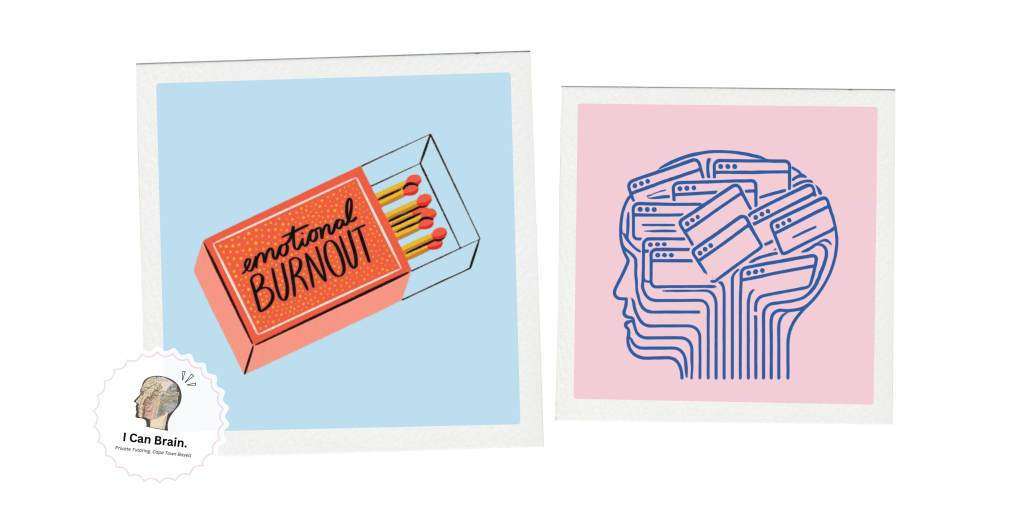
After four years, I achieved burnout. I was booked off of school for three weeks, and booked into extra sessions with a psychiatrist. And at the ripe old age of twenty-seven, I was diagnosed with ADHD.
The greatest emotion I felt in response to this diagnosis was relief.
I wasn’t lazy or useless or a bad person. It wasn’t that I didn’t care or that I wasn’t trying hard enough.
I was prescribed Concerta, and it changed my life. I can put a load of laundry in the washing machine without fighting with myself for weeks to do it. I can start tasks earlier and do them in manageable bites – instead of hyperfocusing on them at the eleventh hour and working without stopping. I couldn’t believe that this is how “normal” people felt – everything in life had felt so so difficult, and I had just thought it was like that for everyone.
Not everyone is as lucky as me; ADHD medication works for some, and not for others. Concerta has helped immensely – but it hasn’t made me neurotypical. I still have struggles, and hard days or weeks. My mood and concentration still fluctuate – did you know that a person’s menstrual cycle (due to low estrogen, needed to create dopamine) can decrease the efficacy of ADHD medications, and is often linked to heightened ADHD-related behaviours? Beside medication, the biggest gift of having a diagnosis was being able to understand my behaviours, and find ways to make my life a little bit more manageable, through a brand-new lens.

One of the biggest things I had to do was forgive myself. I had to forgive myself for the years of struggling, and subsequently years of pushing myself to the brink – physically, mentally and emotionally – in order to hold myself up to unrelenting standards. I had to take all of the patience and empathy I had for my learners, and start giving a little bit back to myself.
My greatest advice to other educators struggling with neurodivergence or stages of burnout is this: put yourself first.
To many teachers this probably sounds ludicrous – we’re told over and over again that being a teacher is about sacrifice. Sacrificing your time, your energy, yourself for the good of your learners. When I went to my principal to inform him I needed to be booked off of school for three weeks due to burnout, he asked me if I could wait a month until exams had started so as not to disrupt the children’s learning. The worst part was that I honestly considered it. My first step in putting myself first was saying no, and taking the time off that I needed.
When I returned to school, I had to implement a lot of boundaries to maintain my health. I downloaded WhatsApp Business, and set ‘work’ hours so that learners, parents and colleagues couldn’t contact me after hours and on weekends. I allowed myself a 24-hour turnaround on replying to emails. I started saying ‘no’ a lot more, and stopped volunteering for ridiculous amounts of extra, unpaid work. I held myself to a strict rule of not working during breaktimes. I also began including little strategies to alleviate over-stimulation and stress. I wore noise-cancelling earbuds in the corridors. In the five minutes between lessons, I would close my door and take a moment to listen to a song, breathe, and mentally prepare for the next lesson. On days that I felt a little more ‘on edge’ than usual, I would work my lessons around this – opting for quieter activities such as learners writing or answering questions.
Putting myself first, treating myself with patience and empathy, and implementing these strategies all meant that I could be a much better teacher. It meant that I had the energy and capacity to perform to my best ability in the place that actually mattered; in the classroom itself.

Now, I get to work at I Can Brain. I get to teach learners whose brains often work a lot like mine. This means lots of flexibility, and working in ways that make sense for both of us on any given day. Some days this means throwing a ball around while answering questions, or having a dance break, or drawing pictures. Sometimes this means taking ten minutes at the beginning of a lesson to unpack a little, to do some breathing and calm our nervous systems. Sometimes it can even be realising it’s just not a useful brain kind of day, and opting for something a little more low-effort so that we can work at maximum capacity the next time.
Sometimes I still get frustrated and emotional. Sometimes I still put things off for days – often when they’re not even that difficult of a task. But now I understand my brain a little bit better. I have tools to help me when I get stuck in an anxious ADHD-rut. Most importantly, I’m trying my best to be kinder to myself, and a bit more understanding. I’m not lazy, or useless.
So really, when I think about it: writing this on Saturday – when the draft is only due on Monday! – is actually not too bad for me. I’m positively ahead of schedule.
If you’re a teacher facing burnout or navigating life as a neurodivergent educator, we’d love to hear your story. Share in the comments or reach out directly – you’re not alone, and there’s a supportive community here for you.
 I Can Brain.
Leave a comment